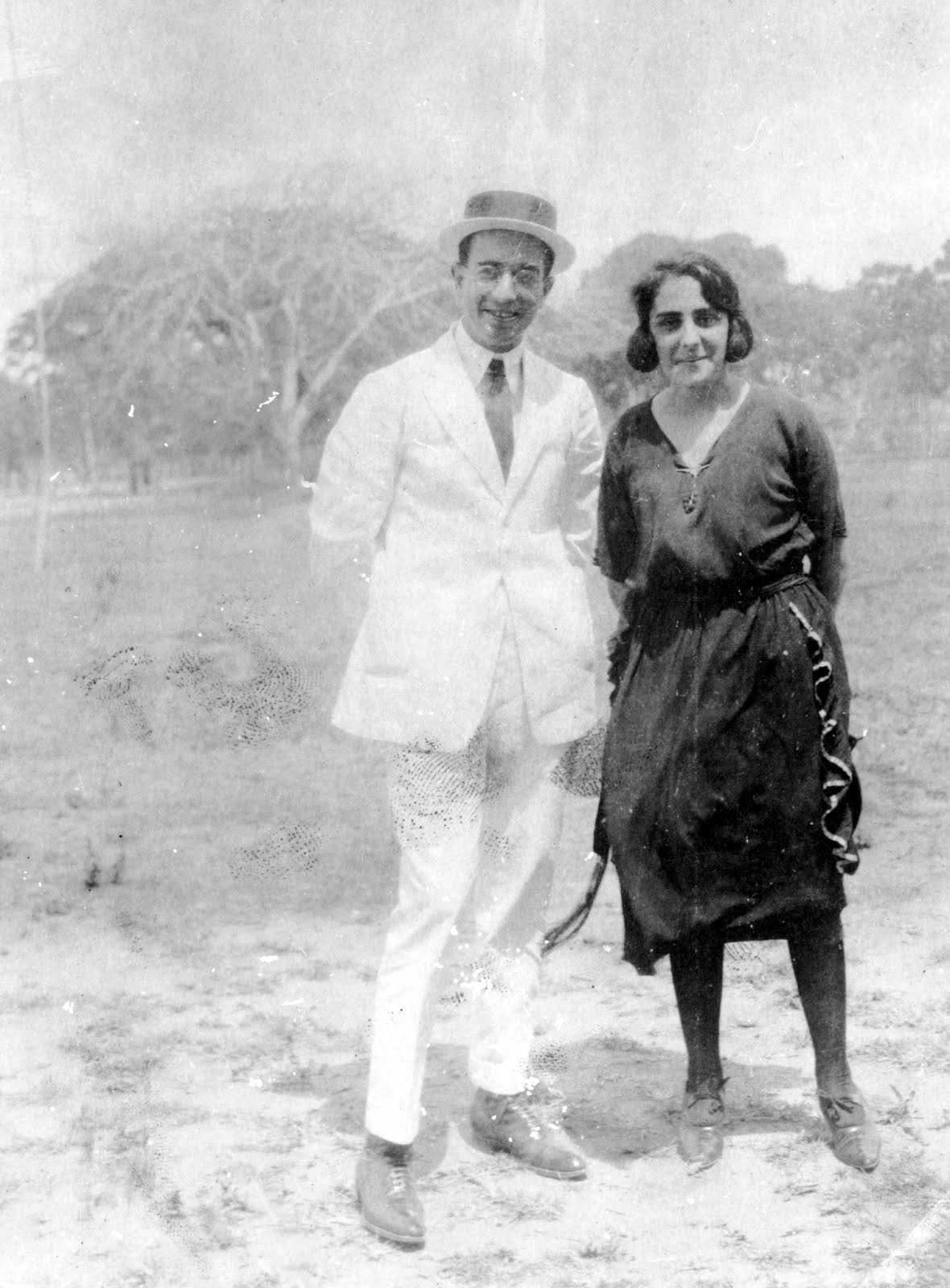
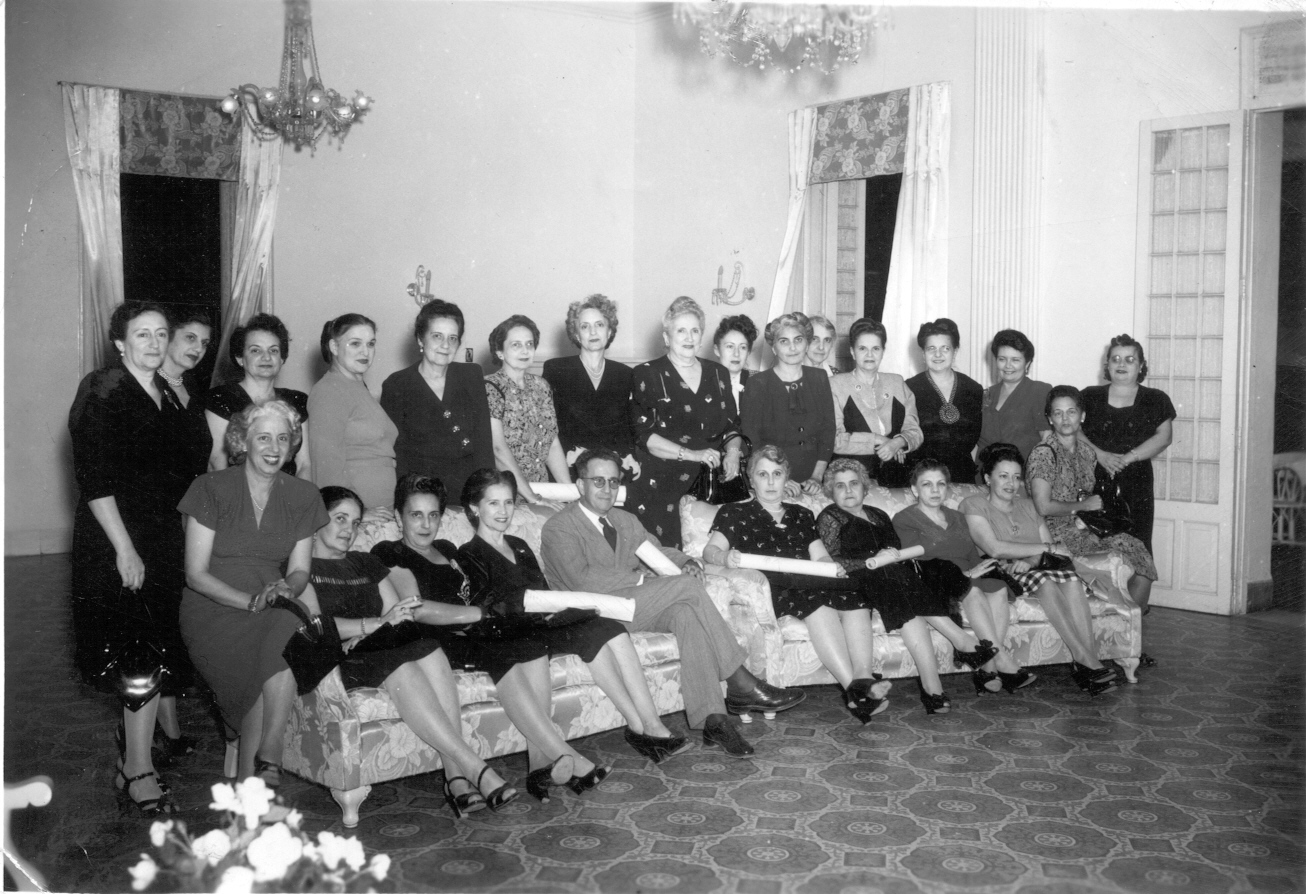
Showing posts with label Rodriguez. Show all posts

Jul 11, 2019

Recipe: Natilla de Mamá

Mariana M. Prats made a delicious cinnamon-infused vanilla pudding that was nothing like the vanilla puddings you are used to. It is both a thinner and at the same time a richer-tasting custard. Eat with a spoon like a pudding, use it as the base for a fruit tart, or use instead of jelly in a jelly roll. Delicious!

It was her maternal grandmother’s recipe, handed down to her (and to her sisters) by her mother, Elia Rodríguez Casas and titled “My Mother’s Custard.” She never wrote it down but her sister Natalia did and that is where I got it.

The dulcero — the desert-maker — tradition in the Maryland Prats Clan comes from Mariana’s paternal line. The Martinez great-aunts, Mimí, Panchita and Natalia, sold their desserts commercially in Camaguey in the 1910s to make ends meet after Mariana’s grandfather died while her father was still in law school. But this recipe comes from the Rodriguez side of the family, Mariana's maternal side. That’s what makes it unique.

It’s easy to make. All you have to do is mix, heat, and stir.

3 cups of whole milk
3 tablespoons of corn starch
¾ cup of sugar
3 egg yolks
1 teaspoon of vanilla extract
1 stick of cinnamon
powdered cinnamon or more sugar for garnish

In a mixing bowl, use some of the cold milk to fully dissolve the corn starch. Then add the rest of the milk, the sugar, egg yolks, and vanilla extract and mix with a spoon or whisk until fully combined. Transfer to a cold heavy-bottomed sauce pan, add the cinnamon stick, and set the burner to medium heat. Patiently and constantly stir the mixture with a flat-bottomed wooden spoon until the custard coats the spoon.

Mariana instructed and Natalia echoes: “stir the custard back and forth, not round-and-round” and “don’t hurry the custard or you’ll burn it.” I think the latter means to not start with a hot burner and to resist turning up the heat if it does not thicken fast enough for you. The stirring instruction, I've been told, is very very important.

When the custard thickens (coats the spoon), remove the cinnamon stick and fill seven to eight serving bowls, garnish with powdered cinnamon and set aside to cool. Mariana always refrigerated it and served it cold, but it is also delicious warm!

An alternative finish is to sprinkle each cup with sugar and then “iron” them just before serving. In the days of charcoal stoves in Camaguey a clothes iron was heated on the stove and the tip was held close to the  sugar to melt and caramelize it, like the top of a crème brûlée serving. Today your handy kitchen blow-torch will do the same job without fouling your electric clothes iron.


Jun 30, 2016

Our Very Rich Relations


This essay won’t embarrass anyone now living because our very rich relations had no children, and I will be telling you why.

The first of the Maryland Prats, Benito and Mariana — and their brothers and sisters, fathers and mothers, and aunts and uncles — would be characterized by both American and Cuban standards of the mid-20th Century to be squarely in the middle class. They ranged from professionals — doctors, lawyers, engineers, college professors, schoolteachers — to businessmen, gentlemen ranchers and shopkeepers.  But one of Mariana’s aunts married well, as the saying goes. She was of the landed gentry and expected to marry well, but, still, she married very very well.
Angela Rodriguez de las Casas and her husband
Federico Castellanos y Batista
All photographs of Federico invariably
show him in dark glasses.

Araceli de las Casas second oldest daughter, Angela Rodriguez de las Casas (1890-1974) and her husband, Federico Castellanos y Batista (1888-1964), were our rich relations. Federico owned a huge cattle and horse ranch south of Camaguey called San Cayetano. He bred purebred cebú cattle — humped cattle typically called Brahman cattle in the U.S. — and Arabian racing horses on the ranch.  He showed and raced the horses in both Cuba and the U.S. He owned both rural and city real estate — city parcels with rental houses and office buildings — in and around Camaguey, and in the 1950s had a multi-million dollar portfolio in stocks and bonds.

Main entrance to the San Cayetano ranch
It is on Camino Matehuelo, some distance
from the city of Camaguey.
San Cayetano
had a gatekeeper’s house at the entrance with an impressive driveway climbing past manicured lawns to a colonial-style ranch house at the top of the rise. Numerous outbuildings included guest cottages, stables, tack rooms, and greenhouses full of orchids. Corrals were numerous, as were pastures and potreros — horse paddocks — on the property. It is located south of Camaguey in a historic area of the central grasslands known as Rescate de Sanguily.  Dotted with royal palm and algarroba (carob) trees, on these savannas much blood was spilled during the revolutions for independence against Spain. And near the San Cayetano property, in the Jimaguayú rebel camp, Cuba’s 1895 constitution was approved.

President Lyndon Johnson
in the 1960s
After Communism settled on Cuba in the early 1960s, the confiscated San Cayetano became Cuban President Fidel Castro’s home-away-from-home when he visited Camaguey. It became one of Castro’s hunting lodges where he entertained foreign dignitaries such as Felipe Gonzales, the Spanish Prime Minister, in 1986. Even today in 2016, its locked gates are guarded by the Cuban military.

In Federico Castellanos’ day he also entertained visiting dignitaries there, many from northeast Texas, who came to inspect his horses and cattle and to enter into lucrative breeding arrangements. In the 1950s Lyndon B. Johnson — then a U.S. Senator from Texas, a cattle rancher,  and destined to be President of the United States in in the 1960s — spent a few days in San Cayetano. He was interested in Federico’s purebred horses and cattle. Mariana was summoned from town to translate for Senator Johnson. Her sisters Elia Maria and Ofelia, who also went to school in Canada, also performed periodic translating duties for Federico.

In the 1930s, Federico added a three-story masonry tower to the sprawling single-story San Cayetano ranch house. His office was the top floor of the tower, where from its windows he could look out over his great ranch. 

A central courtyard at No. 160 Libertad Avenue today
In 2016 the house houses a government agency that maintains its
public rooms very well. More photos at the end of this essay.
The Castellanos had a city house, a mansion, in Camaguey’s tony Caridad neighborhood at No. 160 Libertad Avenue. Relatively new, it was built in the classic colonial style with an imposing façade, impeccably appointed rooms opening to multiple central courtyards with fountains and lushly planted and shaded with trees. Staff quarters and the kitchen opened to still another courtyard in the rear. The master bedroom and its sitting rooms were centrally air conditioned in the 1950s, a very refined luxury for those days.

Federico with Prize Rooster
1954 Kodachrome Print
The Castellanos name and wealth goes back centuries in colonial Camaguey. Like most landed gentry that favored the rebels during Cuba’s long wars against Spain’s domination of Cuba, the Castellanos lost much land and wealth. Camagueyan farmers and ranchers like the Castellanos lost all income when Spanish General Weyler herded workers from their farms and ranches, along with rural subsistence farmers — more than 300,000 of them — into garrisoned towns to deprive the rebels of food and assistance. The famine and pestilence this caused throughout Cuba — even in Spanish-held cities, killing thousands — did not seem to bother distant Spain. The colonial government did not confiscate San Cayetano and other rural properties as they had no value without ranch hands, but they did confiscate all Castellanos city property including the large and stately Castellanos mausoleum in Camaguey’s cemetery. All property was returned in 1898 at the end of the war, and the Castellanos clan quickly rebuilt their wealth.

Federico and Angela
Early in their marriage
Despite their great wealth, they were not aloof. Angela Rodriguez was very warm and loving with her family and kind and pleasant with her staff and when out in public. Federico Castellanos was likewise. Family did not need to be invited to visit them at their city house when they were in town, or at San Cayetano when they were there. Since there were no telephone lines out to San Cayetano, you could not call to inquire or even announce yourself, you just went. The Martinez Rodriguez children all remember spending many day visits and overnights at San Cayetano, riding horses over the vast estate, enjoying lunch al fresco in the garden, and watching the day-to-day workings of the great ranch. Castellanos relations report the same memories of San Cayetano.

Federico and His Niece, Mariana Martínez
at San Cayetano under a mamey colorado tree
In the early 1950s Federico subdivided one of his rural properties just east of Camaguey on the Carretera Central — Cuba’s main east-west highway — into Camaguey’s first American-style suburban housing subdivision, the Reparto Retiro. He extended city water and sewer lines out to the reparto and put in a grid of paved streets with sidewalks. Federico’s and Angela’s wedding gift to Benito and Mariana in 1951 was a lot in Reparto Retiro where they built their house at 55 Honduras Street. And Angela’s greenhouse orchids festooned not only Benito and Mariana’s wedding, but her sisters Elia Maria’s and Ofelia’s weddings and the weddings of many of Angela’s and Federico’s other nieces and nephews.

They each had a town car, the latest model large American sedan — their last automobiles in Camaguey were Cadillacs — and chauffeurs, who drove them wherever they need to go. When they traveled to Havana or to the U.S., a hired car and driver met them at the airport and was at their beck and call for the duration of their stay.

Angela Rodriguez at San Cayetano
Where did Mariana’s aunt Angela shop? Camaguey’s shopping scene was limited for persons of wealth. So, there were trips to Havana; before World War II by train — first class, of course — then as air travel developed, day trips to Havana by air. And then there were week-long trips to New York, Dallas, and other large American cities which included shopping.

But by the 1950’s she would think nothing of taking the morning Pan Am flight to Miami, where a hired car was waiting to whisk her into town to department stores like Burdines or Jordan Marsh, or the boutiques in downtown Miami and on Miami Beach. She often took a niece with her, for companionship and in case she needed help with English. (She went to finishing school in New York as a girl, but her command of English could be limiting.) They would return to Camaguey on the late afternoon or on the evening flight. Her nieces the Martínez sisters, Mariana, Elia Maria, Ofelia and Natalia, remember the trips fondly. Aunt Angela would call the day before. “Are you free tomorrow? Would you care to come with me to Miami? It’s just for the day.” And, of course, they would say yes.

Pan American Airways’ Douglas DC-7C
You have to remember that back then at the dawn of aviation, all air travel was expensive luxury travel. Angela and her guest would be driven just minutes before flight time to the small passenger terminal at the airport (there was no need for large spaces; there were no crowds). She paid cash for her tickets and got her boarding pass while her driver handed in their luggage. (For day trips the luggage would just be their parcels on their return.) Baggage tags in hand, they simply walked a few feet out of the building and through a genuine gate in a low chain-link fence out to the tarmac and up the portable stairs to the propeller-driven airliner. If it was raining the gate agent trotted beside them holding an oversize umbrella. No airport security and their lines back then. And no crowds, because the biggest of the aircraft of the era only had 64 seats.  By the way, Miami’s airport back then was smaller than Camaguey’s!

A young Angela Rodriguez
Unfortunately, all was not plum cakes and roses with regards their marriage. Federico liked the ladies, and his wealth let him have whatever he wanted. His philandering, and the mistress he kept in Camaguey, were open secrets. His distinctive car, with the uniformed chauffeur leaning against it waiting, was frequently seen parked on the street in a working class neighborhood in Camaguey at one of his rental houses where he kept his mistress.  Angela surely knew. But it was never discussed openly by the family and Angela never considered leaving him despite the abundance of evidence.

The close-knit medical community in the small city of Camaguey knew something about Federico Castellanos and Angela Rodriguez from backroom clinical talk that doctors and nurses everywhere have among themselves. It seems that early in their marriage Federico neglected to let Angela know about a venereal disease he had picked up in one of his dalliances. It was syphilis in the telling I heard. The story reports that her infection progressed to the point where the damage it caused before it was treated left her barren. Or maybe it was he who could no longer father children, as no illegitimate heirs came out of the woodwork on his death.

Federico, Angela, and Pepín in Rome
Pepín is Federico’s nephew
José Rafael Castellanos Pérez
But lore on the Castellanos side of the family tells that there was one illegitimate child early on in Federico’s life. He may have fathered a child while he was boarding at a boy’s prep school in Worcester Massachusetts in 1910 — he surely a teenager. The child was put up for adoption and hush money was paid to quiet the scandal.

“There was a sadness to her,” recalled many who knew Angela Rodriguez. The regret both had that they did not have children was not a secret. Both of them doted on their nieces, nephews and grands, I’m sure, to compensate. If you were family and in a pinch and needed a small loan, or had a friend who needed work or needed a low price on a house to rent, you went to Federico.

Compensating for not being able to have children could also be attributed to Angela's extensive china and bisque doll collection. Family reports a huge room in their city house devoted to these dolls, most around two feet tall, but some smaller. They were dressed in sumptuous clothing, some in contemporary styles, and many in the styles of different eras. Matching hats, purses, and scaled down furniture abounded. It was a museum of dolls. 

The New Everglades Hotel, Miami
Except for the stocks and bonds of U.S. companies, Federico’s and Angela’s wealth was appropriated like every other Cuban’s wealth when Cuba converted its economy to Communism in the early 1960s. When he and Angela fled Cuba in 1959 they moved into a penthouse suite at the New Everglades Hotel overlooking Biscayne Bay in Miami to wait out the coup.

There had been coups before in Cuba and after a while things always calmed down and everything returned to normal. All Cubans that had fled to Miami were sure that the United States of America would not let Fidel Castro’s anti-U.S. government last too long. So Federico Castellanos and his wife Angela Rodriguez waited in their luxury hotel in Miami for the Castro government to fall. Federico read the newspapers every day for news and waited.  

Savings Passbook from The First National Bank of Miami, Florida
If they were emptying their Cuban bank accounts this deposit
would not have been a round number. They were just being pru-
dent while believing that the nightmare would be over soon and
they would be back at their beloved San Cayetano.
Shortly after his arrival, he wrote a check for $300,000 (more than two million dollars in today’s money) against his Cuban checking account for some just-in-case money, and put it in a savings account in a Miami bank. Then they waited some more. Shortly afterwards, the Cuban government blocked bank accounts so this withdrawal proved prescient.

In 1962, Federico managed to send for his mistress in Camaguey and get her to Miami. Being an otherwise honorable man, he had surely once upon a time told her that he would always take care of her.  Now he was in Miami the U.S. embargo meant that he could no longer get money to her in Camaguey. I have it on good authority from somebody visiting at the Everglades Hotel the day Angela found out that “that woman” was now in Miami. Angela was seething and did not hesitate to loudly tell Federico that under no circumstances could that woman set foot in their hotel.

Angela’s niece Elia Maria Martinez at San Cayetano
She is on one of the ranch’s Arabians
In May, 1963 Federico called his lawyer to his penthouse suite and signed a new Last Will and Testament in two parts, one Cuba-legal for his Cuban property, prepared and witnessed by a certified Cuban Notary Lawyer who now lived in Miami; and the other Florida-legal for just his U.S. properties (stocks, bonds, and bank accounts), prepared and witnessed by the same lawyer, who was also a U.S. lawyer and a Florida Notary. With that Florida will, he wanted to make sure his wife and nephew would be provided for should he die before he could return to Cuba. He died fifteen months later, in 1964.

He died convinced that his Cuban wealth and property would soon be returned to his executor to distribute as he desired. Little did he, and virtually all the other Cubans then in Miami, know what history had in mind for the mid-century self-exiled Cubans. His 1963 Cuban Last Will and Testament has never been filed in the Camaguey courts, and it remains to this day a Testamento Abierto — an un-probated will. I have no idea where the original is, but I have a copy.

2019 view of one of the corrals in San Cayetano 
The main house, with its tower peaking over
the corral roof, is in the distance.
Having no children of his own to inherit, here is what he willed: Angela was to have the use of their Camaguey city house and the San Cayetano house and their contents, and all the town automobiles, for the rest of her life. Also half of his financial instruments were hers as her “widow’s quota,” and that care must be taken to ensure that all jewelry that he gave her remain hers forever. (A Widow’s Quota is a Spanish inheritance device that ensures that a widow is not disinherited.) Various nieces, nephews and relatives from his side of the family were to receive a lot of city land, or the house they lived in that he owned, or a sum of money (e.g. $50,000 – some $375,000 in today’s dollars). To a long list of more distant relatives he left $1000 ($7750 today).

An entrance at the San Cayetano Farms complex
This one is to the “Rescate de Sanguily” Livestock
Genetics Company, photographed in 2016
It is apparent that their wealth was tied up in Cuba, because Federico’s Florida will, after expenses, left Angela only $219,761.70 in cash, stocks and bonds. That sum is nothing to sneeze at, but it was not anywhere near the many millions of dollars in stocks, bonds, and cash-producing properties he owned. What did she own in her name? Beside a sixth of the Songorrongo ranch (which see), not much beside her closets full of clothes and jewelry she left behind in Cuba.

Federico may have had his failings, but he had a charitable heart. The rest of his Cuban will concerns itself with setting up the Federico Castellanos Batista Foundation. The foundation would be endowed with all his remaining wealth and properties immediately, and the houses and furnishings that Angela had the right to use would revert to the Foundation on her death. The foundation was to be based in San Cayetano and it was to dedicate itself to the education poor rural boys, preferably those who lived near San Cayetano, training them to become farmers and ranchers. The initial number of students was to be 40.

Recent Photo of San Cayetano, Camaguey Province, Cuba
The main house, with its tower, is in the center of the photograph.

Unfortunately, his surprisingly generous philanthropy was colored by the racial prejudices of his time. Not only could the students only be boys, not girls, but they could only be white boys. Don’t believe any Cuban who tells you that there was no racial discrimination in Cuba, or that there is none today. While there was little overt segregation like in the American South, racism lurked under the genteel politeness of Cuba’s upper classes.  And it appears that in the 53 years since Federico had his lawyer write those words, there has been less progress against racial discrimination in Cuba than in the United States. 

But I don’t want to end this essay on such a sour note. I would rather conclude by celebrating what appears to be our ancestor’s redemption in exile. Federico Castellanos was a kind and generous — but flawed — man (aren’t we all to some extent or other?) who loved his wife and who came to regret the selfishness that caused them to be without children. The foundation and school that was not to be was his attempt to atone.


Page from the Camaguey edition of the
1944 Social Directory “Mundo Elegante”

by Mario R. Silva Llopis showing photos of the 
Castellanos residences, three of their house 
in town and one of San Cayetano.
Click on image to enlarge, then click again.
(Courtesy of The Hotel Camaguey Blog)
Postscript: Shortly after Federico Castellanos’ death, his wife Angela Rodriguez left their penthouse suite at the Everglades Hotel to live more modestly with one of Federico’s cousins now in Miami, Jose Rafael Castellanos Perez, the executor of Federico’s will. The Cuban “situation” was not going to be resolved any time soon, and finances had to be conserved. She suffered a stroke in 1969 and came to live with her sister Elia (Mariana’s mother) at the somewhat shabby Bradley Boulevard Apartments in Chevy Chase, Maryland. The stroke physically weakened her but did not significantly incapacitate her, and she reigned from her easy chair at her sister’s apartment for many years. She died in 1974. She was 84. 

Her last will and testament was very simple: Her remaining funds were to be divided into four parts and given to her three living sisters Elia, Margarita, and Maria Luisa and the fourth part to the two children of her deceased brother Gaspar. Her niece Mariana was the executor. Of her portion of their wealth there was not much left: they each got $18,350.64. Eyebrows were raised —Angela had been quite frugal after his death — but that was all that Mariana found in her accounts.

Angela Rodriguez in her easy chair
at the Bradley Boulevard Apartment in Chevy Chase
Angela also left a Testamento Abierto for her Cuban property. It was signed in Montgomery County, Maryland, in 1970. Her sixth of Songorrongo was to be divided equally among her three living sisters. Financial property (I'm assuming that this was her widow's quota from Federico's will) was to be divided in four equal parts in the same manner.

Angela was my godmother, and godmother to a number of other children in the Prats-Martinez-Rodriguez clan. Likewise a number Maryland Prats relations called Federico their godfather. We still miss them.

A breezeway at No. 160 Libertad Avenue in 2016

This photograph of Elia Maria Martínez
in her wedding gown was taken in
one of the public rooms at No. 160
Libertad Street
This photograph of Mariana Martínez
in her wedding gown was taken in
one of the public rooms at No. 160
Libertad Street

Original 1940s tile work in one of the bathrooms
at No. 160 Libertad Street
The façade, cream-colored, of No. 160 Libertad Street
PDF: Letter from Probate Attorney to Mariana Prats in 1976 Notice the nice words on the last paragraph, which begins on page one.
Mr. and Mrs. Federico Castellanos and his cousin José R. Catellanos
visit the 1948 Texas State Fair to “inspect Brahman herds and purchase
stock for their island ranges.” Click on image to read article.


Mar 20, 2016

Songorrongo

When Elia Rodriguez’ mother , Araceli de las Casas, died in 1932, her 1911 Will and Testament left her estate in equal parts to her eight living children, Concepcion (Conchita), Araceli (Celita), Angela, Gaspar, Maria Luisa (Male), Rafael, Margarita, and Elia. She owned three fincas — cattle ranches — named Saratoga, Lauritania, and Songorrongo; her house in town; $5000 in Spanish gold; and a share in a house-for-rent at 123 Republica Street.
Araceli de las Casas

(Interestingly, the will was written and filed by Elia’s future husband’s father, Joaquin Buenaventura Martínez Diaz, an Attorney practicing in Camaguey. In 1911 Elia was 6 years old and Ventura 13, and by all accounts had never met until Ventura returned from University.) 

Camaguey province was to Cuba as northeast Texas is to the United States: cattle country. Camaguey had its sugar plantations and citrus groves like the rest of Cuba, but it also shipped dressed beef and beef-on-the-hoof by rail west to Havana and east to Santiago and all points in between. It was cowboy country. There were rodeos. Texans came to Camaguey to check out the cattle and Cubans went to Texas to do the same. During the great Cuban exodus that began in the 1960s, a large number of Cubans settled in Texas.  Growing up in Camaguey in the 1950s, meals I remember were always beef or pork, beef or pork. Chicken was a special treat.

1923 Plat of Songorrongo with the newest additions
Click on the image to enlarge
Araceli’s will said that her estate was to be divided equally eight ways. Araceli’s eldest son, Gaspar Rodriguez, was named executor in her will and he and his seven siblings reached an agreement that he would get the Lauritania ranch, Rafael the Saratoga ranch, and the six girls would split the Songorrongo ranch. Elia does not remember a discussion. She said that the boys told the girls that this was best and it was the way it was going to be, and that was that.  The girls got Songorrongo. She was still annoyed all those decades later.

Earlier in 1913 shortly after her husband died, the widow Araceli de las Casas purchased a rural piece of land of around 550 acres bordering La Horqueta Road named “La Amelia,” (previously part of the “Martinez” ranch) adjacent on the south border of her late husband’s ranch “Songorrongo” , for $18,200 in cash. The sellers were behind on their taxes and part of the payment was retained by the lawyer to obtain a clear title.

The 1933 division of Songorrongo
I can find no additional paperwork, but the note on the 1923 plat for Songorrongo notes the La Amelia addition, and also 100 acres subsequently annexed (purchased) from the adjacent “Martinez” ranch. This all made the 1923 Songorrongo  a ranch about 2260 acres (just under 68 caballerias in the Cuban land measurements of the day) or a little over 3½ square miles. It was an irregular area, longer north to south than east to west. The river Guareao wound through Songorrongo, roughly from the northeast to the southwest. 

Songorrongo’s original ranch house, outbuildings, and corrals were near its northwest corner, off La Horqueta Road. The six women agreed that since these improvements had value, whoever got the division with the house on it would get less land. So, starting from the south, using east-west lines Songorrongo was first divided into four 12-caballeria lotes or parcels (about 399½ acres each), leaving just shy of 20 caballerias at the north. The remaining 20 caballerias were divided with a north-south line into 8 caballerias on the east where the ranch house was located, and just shy of 12 caballerias on the west.  They drew straws and Maria Luisa got the ranch house.

Five of the Six Owners of Songorrongo at Songorrongo
Elia, Margarita, Maria Luisa, Celita and Conchita Rodriguez
circa 1955. Behind them the veranda of Elia's ranch house.
The parcels were numbered 1 through 6; top to bottom on the map. Maria Luisa Rodriguez got parcel 1 with the house. Elia got parcel 2. Margarita parcel 3, Angela parcel 4, Celita parcel 5, and Conchita parcel 6. The parcels did not get new names each as sometimes happens, instead they were all known as Songorrongo plus their parcel numbers. Five of the six parcels bordered the road, an unimproved, rutted country lane which forded a number of streams. Elia’s parcel did not border the road and initially could only be reached on horseback.

Elia Rodriguez and Ventura Martínez married in 1925 and she moved in to Ventura’s and his brother Antonio’s house to start their family. Ventura’s mother had passed away in 1914, but Elia would tell you that she moved in with four mothers-in-law: Ventura’s spinster aunts!  (Ventura’s father had also died when Ventura was young, in 1918 when he was 20 years old and studying law at the University of Havana.) After graduating and obtaining notary concessions from the government, he revived his father’s law practice and slowly built up his income. Then in 1933 his wife inherited a piece of Songorrongo.

Ventura and Elia in the 1920s
Ventura was a city boy, born in 1898 in Havana. His family moved to another city, Camaguey, when he was 10 years old. But this city boy was not only studious but athletic and liked horseback riding. He probably learned how in Jaruco, in the countryside outside of Havana where our branch of the Martinez family came from.  Even before he was married he knew the Rodriguez girls from when he played tennis and I’m sure he was invited out to their ranches on occasion where he could ride. He not only liked the countryside, but he found that he was attracted to the business of farming and ranching. It seems he was born to be a country boy.

Elia, the youngest in her family, could not help but like the countryside. Her mother owned three ranches, and when she was not at their city house or at boarding school in Havana, and later in New Jersey, she was with her mother and siblings at one ranch or another. And it was nothing for her to jump on her horse and ride to visit friends at a nearby ranch. After she married, she still found time to spend at her mother’s ranches, and now Ventura went with her.

So when Elia inherited one sixth of Songorrongo in 1932, she and Ventura made plans to turn their piece of it, parcel 2, into a working ranch and build a house in the countryside they could retreat to. The first order of business was to find a nice location on their parcel for the house and to build a driveway to the it from the old ranch house on Maria Luisa’s adjacent parcel 1. Remember, their Songorrongo parcel did not have road frontage. It took two tries to site the house, as the first location, on a rise with beautiful vistas, was not suitable because the wells they dug did not produce good water.  Near another nice rise they dug a well and found sweet-tasting water this time, cut the driveway to it, and built a simple two-room palm-frond thatched house, outbuildings and corrals. They repaired fences, started an orchard of fruit trees, cleared for a vegetable garden and started ranching.

Elia and Ventura's eldest, Mariana, in Songorrongo, 1951
And now Elia had a place she could call her own. She would be running this household, not her mothers-in-law. And now she had a ranch where she could introduce her children to the rural side of life.  When her mother Araceli died, Elia and Ventura had three children, Mariana (born in 1926), Elia Maria (born in 1930), and Ofelia (born in 1931). Joaquin Ventura (Venturita) would be born soon, in 1934. Nine years later Juan Antonio would arrive, followed by Natalia in 1944. 

But getting to their sixth of Songorrongo could be difficult. No matter how much gravel they dumped on problem areas of their long driveway, the mud during the rainy season made the way in and out of Songorrongo Parcel 2 next to impassable. Eventually Ventura and Elia purchased a 5-mile 50 foot wide easement northwestward that gave them access to the new Carretera de Santa Cruz — the Santa Cruz Highway that ran south from Camaguey to the coast. That driveway was a much shorter route to Camaguey and only had one low-lying section that got muddy occasionally.

Some 10 years later, Ventura and Elia were earning more money from Songorrongo than from his bufetes — his law offices — so he wound down his Camaguey law office, keeping the one in Gauimaro  (50 miles east of Camaguey) where he installed a law clerk to do the heavy lifting, driving over every other week just to review and sign documents.  With the significant majority of their income now from Songorrongo, he was now a rancher full time, energetically improving their Songorrongo parcel and the adjacent parcel they operated for Elia’s sister, Margarita.

Approximate Location of Songorrongo
Then they started on building their dream house in Songorrongo. It took some 20 years to finish it. They would do what they could when funds were available, and they saved and waited so they could use the best materials and methods. It would not be ostentatious or extravagant; instead it would be well-built, comfortable and functional.

Songorrongo Parcel 2 Ranch House
This photo shows the veranda at the front of the house.
In the foreground is Elia with her son Venturita's horse, El Guajiro.
 Built of masonry with a low-pitched terra-cotta tile hip roof, the new house was built in front of the original thatched-roof house, with a breezeway connecting them. When the new house was habitable, the old house was improved to become the kitchen and ranch-hand quarters for the complex. The house was as simple as it was beautiful. The floors were laid with large Spanish ceramic tiles. A great room the length of the house was flanked by spacious bedrooms , three on the left and two plus a bathroom on the right.  The bedroom walls stopped short of the cathedral ceiling, allowing for breezes to flow throughout the house when windows were open.

In the great room a large dining table was nearest the kitchen, with sofas, rocking chairs and small tables grouped into conversation areas throughout the rest of the room.  A large Atwater-Kent console radio was centered in the room on one of the lateral walls. A small pantry was off the dining area with cabinets, a counter and a single-door Kelvinator — an automatic refrigerator that was cooled by kerosene. The great room opened to a veranda on the front of the house that looked out on a modestly sized lawn that sloped down to the driveway gate, with a small pond across way in the distance on the left.

Juan Antonio swimming in the pond
The complex had running water, including hot water heated by coils and a holding tank built into the kitchen’s large multi-burner cast-iron wood-fired range. A windmill at the well in the orchard pumped water to a large wooden tank nearby set on tall stilts. On windy days the tank would overflow until someone ran the distance from the house to disengage the clutch on the windmill.  The house was lit with electric ceiling lights and table lamps powered by a 12 volt DC system. Twelve large one-volt lead-acid batteries located in a small outbuilding and were recharged by a noisy gasoline generator that was fired up every afternoon for half an hour or so to provide power for that evening’s lights and radio.

Elia’s and Ventura’s ranch was a dairy farm with about 300 cows and maybe 100 to 200 calves born there every year. Every morning 10-gallon stainless steel cans of milk went out to the highway for 5 a.m. pickup. The milk went to the Guarina dairy in Camaguey for pasteurization, and for butter, cheese and ice cream. Some female calves were kept to replenish the herd and the rest were sold to other dairy farms. The male calves were weaned, castrated and pastured for a season before being sold as añojos — yearlings. They were sold to Elia’s sister Margarita and later to her son José Calderón when he came of age, and they were raised for two years on Margarita's Parcel 3.

“La Promesa.” This heifer won first prize at the Sancti
Spiritus Exposition in December, 1944.
The yearlings, now adult cattle, were subsequently sold to Federico Castellanos, Elia’s sister Angela’s husband, who administered parcels 4, 5, and 6 for his wife and two of her sisters. The steers were driven across the fence to Songorrongo parcels 4, 5, and 6 where they were fattened up for another season or two before going to market. As you can see, even though Songorrongo had been divided and with different owners, its parcels together functioned as a complete cattle ranch with cows giving birth to calves, calves growing to yearlings, yearlings raised to adults, and beef cattle fattened and sent to market. To the beef output add milk, and as you will soon find out, chickens, eggs, and a bit of fruit, and Songorrongo was a full-function, if small, piece of the system that once fed the nation.

By the 1950s the orchards were well-established and providing fruit for the household and for sale — avocados, anoncillo, tamarind, guava, and various varieties of mango.
Anoncillos
Melicoccus bijugatus
Sweet, tart and creamy

White and Red Guava
Psidium guajava
Fragrant and sweet

The guavas at Ventura and Elia’s Songorrongo orchard were of the more common red variety. But there was a tree of white guavas at Maria Luisa’s Songorrongo ranch that Elia’s daughter Elia Maria recalls that were just divine. When they got word that that tree was in fruit, she and her sisters Mariana and Ofelia would jump on their horses and gallop over to gorge on those fresh white guavas.

Brooder chicks in shipping carton
In the 1940’s Elia came up with the idea of raising hens for eggs. She purchased White Leghorn hatchlings by mail-order from Oregon and raised them to hens, and with the help of a rooster or two they were in the egg business.  A large hen-house was built and eggs were candled and sized in the evening for grading. By the 1950's 2000 hens were laying eggs at Songorrongo. Another 10,000 chickens were raised from chicks for market. Songorrongo eggs and Songorrongo chicken were sold in grocery stores in Camaguey and served in restaurants there. Songorrongo had the Woolworth lunch counter concession for eggs.

A Screaming Peacock
The ranch also had guinea fowl which raised themselves and were culled periodically, and a flock of free-range chickens that would roost in trees near the house at night, where, using ladders and flashlights, they could be picked for market. Rounding out the fowl was a  flock of free-ranging peacocks and peahens, who Venturita says, made excellent “watchdogs,” announcing arrivals by car or horse with their unique calls, way before any human could detect them.

Double-yolk fried eggs
 I remember looking forward to breakfast when I visited Songorrongo as a young child. We were served two-yolk eggs,  extra large eggs, or multiple undersized eggs sunny-side up — they were the eggs that did not make the grade for sale. And with all that milk, cream, and eggs on hand, there were all types of yummy deserts and sweets at Songorrongo.

Marabú in bloom
The bane of ranching in the Camaguey countryside were these three nuisances: marabú, nabú, and garrapatas.  Marabú (Dichrostachys cinerea) is an invasive species in Cuba, imported from Africa in the 1800s for ornamental gardens, from where it immediately escaped into the wild. In the U.S. it is known as the sicklebush, Bell Mimosa, Chinese lantern tree, or Kalahari Christmas tree.  It is a fast-growing leafy woody spiny bush with beautiful pink and yellow blooms. It spreads rapidly in open pasture, choking out grasses and other native species. A pasture can become unusable by cattle in just a few seasons if marabú is not kept in check. All ranch hands and Elia and Ventura’s children went out on their horses on marabú patrol to keep it in check, spraying poison on its leaves. When it got established it had to be hacked out with machetes, and the spines took their bloody toll.

Cattle shunned marabú, but they loved nabú, a tasty little plant that grew in the shade of pasture trees where cattle loved to congregate in the heat of the day. Nabú, however, gave milk a nasty flavor, and nobody but the pigs would drink nabú tainted milk. The Guarina dairy certainly would not accept it. Whenever the milk went off, the ground under all the trees had to be inspected and nabú pulled out or poisoned.

Elia Maria on her horse, Mambí
Elia Maria swears by her story of the exploding sow. It was not only nabú-tainted milk that was added to their slop, but also whey (the watery part left over from cheese production).  You see, when milk was not picked up for some reason or other — perhaps the dairy’s truck broke down  or came too early — a scramble ensued at Songorrongo to use all that milk immediately before it spoiled.  A few gallons were stored in the small kerosene refrigerator in the pantry, but all those other gallons were turned into cheese, or boiled down with sugar into dulce de leche and other desserts.  One day, after an especially large batch of cheese was processed, one of the big sows was gorging on whey in the pig pen when she exploded!  Elia Maria heard the sound and came running, finding pig guts all over the sty. Perhaps the whey was not all that fresh and had fermented. I’m guessing there was pork on the menu at Songorrongo and nearby ranches for a number of days afterwards.

Then there were the garrapatas — the ticks — that clung to livestock, horses and people.  Livestock had to be dipped and sprayed often to keep them in healthy. Horses where brushed down daily to discover and remove them. And there was the nightly check for garrapatas  before going to bed. They could have crawled anywhere before they sunk their teeth in you. How to remove a Cuban tick from a human body? The two approaches were to apply the lit end of a cigarette to shock them into letting go, and the other was to suffocate them with a cotton ball soaked dripping wet in rubbing alcohol.

You also had to be careful of snakes. They normally kept to themselves and slithered away when you came close, but after a few cold days in winter, rare in Cuba but not unknown, they would seek the warmth of the outbuildings or the ranch house. Mariana told the story of the snake she found in her bedroom in Songorrongo one afternoon at siesta time. All the men were out in the pastures and it was just her and her mother Elia at the house. It was a good size snake, four or five feet long. She cried out and retreated, slamming the door and calling for her mother. Elia got a machete, dispatched the snake and then cleaned up the mess.

Joaquín Cane de Varona
Posing with his milk cans.
Songorrongo had a special ranch hand, Joaquin Cane de Varona, Elia’s “older brother.” He would tell everyone that, and if you asked Elia to verify she would agree. It was because they grew up together at Elia’s mother’s main ranch, Saratoga, and they were very close. Joaquin was the son of a former slave that worked for the Rodriguezes, and he went to work for Elia’s mother when he came of age. Shortly after Elia and Ventura started their Songorrongo venture, they hired him away from Saratoga. He was not the sharpest knife in the drawer, but he was good at small, repetitive tasks.  In the 1940s and 1950s he was in charge of getting the milk cans to the highway before dawn every morning and bringing back the empties. He had a small purpose-built cart he used to convey the milk, pulled by a horse.

The milk cart
Playing on the milk cart are Ofelia, cousin Teresita Martínez,
Elia Maria, Venturita and cousin Alfredo Salvador with the reins. 
Ventura’s and Elia’s children loved to be at Songorrongo.  They learned to ride at a very young age, and had their own horses. On horseback they had the run of the ranch and nearby properties. They could go down to the river for a cool swim, or across the back meadows and across nearby ranches to visit friends. They were sent out on horseback to scout lost cattle or to report on the state of  watering holes and fences at distant parts of the ranch. When Elia Maria married Manuel Lopez, an engineer with an American nickel ore company operating in Cuba, he only had one week’s leave for the honeymoon. So everyone cleared out of Songorrongo’s ranch house and they spent it there. Both were avid horse riders, and they spent their honeymoon on horseback in paradise at Songorrongo.

The Martínez-Rodríguez Family at Songorrongo’s front lawn, circa 1950s
Left to right, top: Elia Maria, Mariana, Natalia, Ventura, Elia
Bottom: Venturita, Juan Antonio, Ofelia.

The final touch to Elia and Ventura’s Songorrongo, a modest entrance gate with masonry posts at the foot of the lawn, was erected in 1960, and a year later the ranch was confiscated by the new Cuban government that had decided that communism was the way to go. There was to be no more private property; everything belonged to the people under the care of the state. You could have only one home and there you would just be the tenant. So Elia and Ventura chose their city house in Camaguey and reluctantly left Songorrongo, taking Joaquin Cane with them. The three were old enough to retire, and that is what they did.   

Benito and Mariana Prats in Songorrongo
Mariana's sister Elia Maria on horseback
Their ranch hands in Songorrongo became employees of the state, and were surprised when their salary was adjusted down and benefits they were enjoying, like free food staples and gasoline Ventura brought in from the city, stopped. They could no longer simply grab a chicken for the fry pan because the chickens now belonged to the state.

The centralized top-down economy imposed from Havana did not work well for Cuba’s cattle industry, and ranching output dropped like a stone. Before long, Cuba, a net exporter of food even when not counting sugar, began importing food from the Soviet Union. (Today, Cuba imports more food from the United States than any other single country.) By 1963 possessing beef without a permit, for example, ground beef in your refrigerator, was a crime punishable by jail time*.

In the 1970s the state abandoned Songorrongo and marabú promptly consumed its pastures. Afterwards, the government tore down the ranch house, as it was no longer needed.

###

Notes:  “Songorrongo”  is a Taino and Siboney Indian name that means “Land of Gold”  in reference to the rich and fertile soil of the area.

Google Songorrongo and you'll find references to the Cuban revolutionary war against colonial Spain. Some rebels made their headquarters there. Also, after victory over Spain, in 1903 a number of landowners including Gaspar Rodriguez, Araceli's husband and then the owner of Songorrongo, petitioned the new government in Havana to have the La Horqueta Road improved and a bridge built over the Guareao River, which you will find on the plats shown above at the curve in the in the road. There is no information as to whether their petition was successful.


Cuban style Palomilla Steak
One day in the 1960s, it became illegal to possess and consume
beef in cattle-country, Camaguey. 

* Benito Prats told the story of a fellow doctor in Camaguey, an anesthesiologist who, in the 1963, was found guilty of possessing beef. Someone had ratted him out and beef was found in his refrigerator. He was sentenced to a month in jail. Unfortunately, he was the last anesthesiologist in Camaguey, the others having fled the country earlier. He was still needed at the hospital so he was released from jail every morning so he could work at the hospital.


Feb 11, 2016

The Tennis

Ventura Martinez and Elia Rodriguez
in their tennis whites
sitting on the ground during a photo shoot
Ventura Martínez y Martínez met his wife, Elia Rodríguez Casas, at the Camaguey Tennis Club. They were married in 1925. Ventura was instrumental in its founding and his spinster aunts were honorary members of the club, in charge of sweets and pastries at functions in its early days. Elia’s sister Celita Rodríguez Casas was president of the club between 1926 and 1931. This is the story of “The Tennis.”

1920s Tennis Dress
Advertisement of the era
In 1917 in Camaguey a group of twenty-something tennis players got the idea of starting a tennis club. This was the first generation to come of age in the peace that followed the long and bloody wars against Spain that freed Cuba from colonial rule. Camaguey was booming. The population of the city would more than triple between 1907 and 1928. Until 1902 Camaguey was an isolated provincial capital 45 miles from the sea and more than 340 miles and three and a half difficult travel days away from the capital of the country. That year the Cuba Railroad was completed, reducing the trip west to Havana to a comfortable 15 hours. The trip east to Santiago de Cuba and the U.S. Naval Base in Guantanamo was likewise improved.

Araceli Rodrigues Casas
“Celita”
Camaguey’s economy grew significantly after the railroad arrived due to industry it enabled and due to the fact that the railroad was headquartered in Camaguey. A large amount of capital flowed through Camaguey, as evidenced by the opening of foreign bank branches lead by the Royal Bank of Canada. With better access to domestic and foreign markets the numerous cattle ranches and sugar plantations in the region expanded significantly. A growing economy attracted professionals, many fresh from university. These young professionals—along with young adults from families of the landed gentry and the growing upper middle class—embraced tennis, the elegant sport that was sweeping the globe at the time.

In Camaguey it was mostly young women who took up the sport initially. They would meet at the only public court in the city at the Casino Campestre Park to pair off and play. This was a cement court in poor repair, and there was no hope that better facilities would be forthcoming. “Why don’t we build a tennis club with proper courts and a clubhouse,” suggested Pilar Garces, “owned and operated exclusively by women.”

Officers and Directors of the Camaguey Tennis Club — And Ventura
1947
Approximately forty young ladies incorporated The Camaguey Tennis Club early in 1919. It was named in English; tennis, after all, was an English sport. Two young gentlemen, Felipe Pichardo and Ventura Martinez — both lawyers who had just graduated from the University of Havana — were instrumental in assisting the women in setting up the Club. Excellent tennis players both, they drafted the bylaws, drew up leases, obtained permits, navigated the city’s bureaucracy, guaranteed loans — and also cleared brush, hauled bricks, sand, and furniture, mixed cement, and tended to the club’s workhorse.

When the club opened in 1919, 106 ladies joined as founding members. And when “the Tennis” — the name everyone in Camaguey used for the club — celebrated its twenty-fifth anniversary it was already one of the premier institutions in Cuba, receiving distinguished guests from all over the world, hosting championships and fielding players in tournaments throughout the country and abroad. Its women-only membership policy was unique.

A court at the Camaguey Tennis Club, 1945
Men held guest-member status and paid no dues. They could be expelled at any time for any reason and without recourse. By 1944, the Tennis had grown into a significant philanthropic and cultural institution for Camaguey and vicinity. Its directors and officers were continually refreshed with up-and-coming young members and the Tennis continued serving its growing list of members and the community at large until the Great Cuban Exodus that began in 1960.

Felipe Pichardo — by then a well-known poet, writer, and orator — gave a speech on the history of The Camaguey Tennis Club Friday evening, January 28, 1944 at the Club. That speech is reprinted here in its original Spanish with a full English translation.

In the early days at the Camaguey Tennis Club
Circa 1922.
Top row: all unknown except third from left: Salomé Sayas Bazan, and left-most: Maria Louisa Rodriguez Casas.
Second row: Ramón Peralta and his wife Concepción Rodriguez Casas, Federico Castellanos and his wife Angela Rodriguez Casas, Araceli de las Casas, mother of the Rodriguez Casas in this picture, Margarita Rogriguez Casas, Celita Rodriguez Casas, and three of Ventura’s aunts: Mercedes Martinez Díaz, Natalia Martínez Seijas, and Francisca Martínez Seijas with back to camera.
Bottom Row: Joaquin Martínez y Martínez and his wife to be Elia Rodriguez Casas, a fourth Ventura aunt: Maria Antonia Martinez Seijas and Rafael Rodriguez Casas.

Two stories Felipe Pichardo told that evening were the story of the club’s horse, and of Ventura meeting Elia.
 “But it is necessary to say more of Ventura. He was, in one person, the administrator, foreman, laborer, tennis player and dialogue prompter at the talent shows. And he also played the part of the veterinarian since he was the keeper of the Tennis’ horse.


“The Tennis’ horse! We would be ingrates if we did not dedicate a reminisce to the horse. I don’t know were he came from; I don’t know from what animal asylum that sack of bones came from. We used him to pull a primitive roller that was used to pack down the court, which the tennis players themselves would then mark with the ritual lines. But the tragic thing about the horse was not his poor figure, but his terrible ailment. He had an ancient wound in his neck that never closed, and from it dribbled out the water he drank. It was here on the Club’s grounds that Ventura kept vigil over the horse with a brother’s love. 
Elia Rodriguez Casas
”It was here on the Club’s grounds that, later, Ventura met the beautiful adolescent Elia Rodriguez Casas, when she had returned from the school where she had finished her studies. In short order Ventura found himself without ventura (happiness) — in other words, heartbroken — until he finally convinced her to be his noble wife.
“Ventura’s labors for the benefit of the Camaguey Tennis Club were prodigious, and won’t be forgotten by this audience.
Felipe Pichardo
In addition, he was a strong and unflappable player of the fine sport, and inseparable partner of Salome Zayas Bazan. They formed a pair that would have been unbeatable, if it wasn’t for another pair, Aurelia Garces — elegant in tennis without many equals — and me. ... Obviously.” 
Pilar Garces
Founder of the Camagüey
Tennis Club in 1917
“Why don’t we build a
tennis club ... owned and
operated exclusively by women.” 

Camaguey Tennis Club Swimming Pool
Rodriguez Family Photo on the Grounds of the Club Circa 1922
On horseback with hat: Joaquín Ventura Martínez, soon to be husband to Elia Rodriguez.
Standing: Mercedes Martínez Diaz, aunt of Ventura Martínez; Angela, Araceli “Celita”, Elia, Maria Luisa “Malē”, and Margarita Rodriguez Casas; Araceli de las Casas, mother of the Rodriguez Casas in this picture; Unknown person; Concepción “Conchita” Rodriguez Casas.
Bottom row: Federico Castellanos, husband of Angela Rodriguez; Rafael Rodriguez Casas; fellow in the thin tie could be Felipe Pichardo, friend of Ventura Martínez (the Unknown woman in the previous row could be his wife or wife-to-be); and Ramón Peralta, husband to Conchita Rodriguez.
Missing: Gaspar Rodriguez Casas. Perhaps he is the photographer.